

Sambal
Sambal is a globally celebrated chili sauce or paste, typically made from a variety of chili peppers with secondary ingredients such as shrimp paste, garlic, ginger, shallot, scallion, palm sugar, and lime juice. A true culinary icon, sambal is enjoyed throughout Indonesia and comes in many regional variations. This beloved condiment is known for its fiery kick, aromatic depth, and the irresistible combination of spicy, savory, and sometimes sweet or tangy notes.
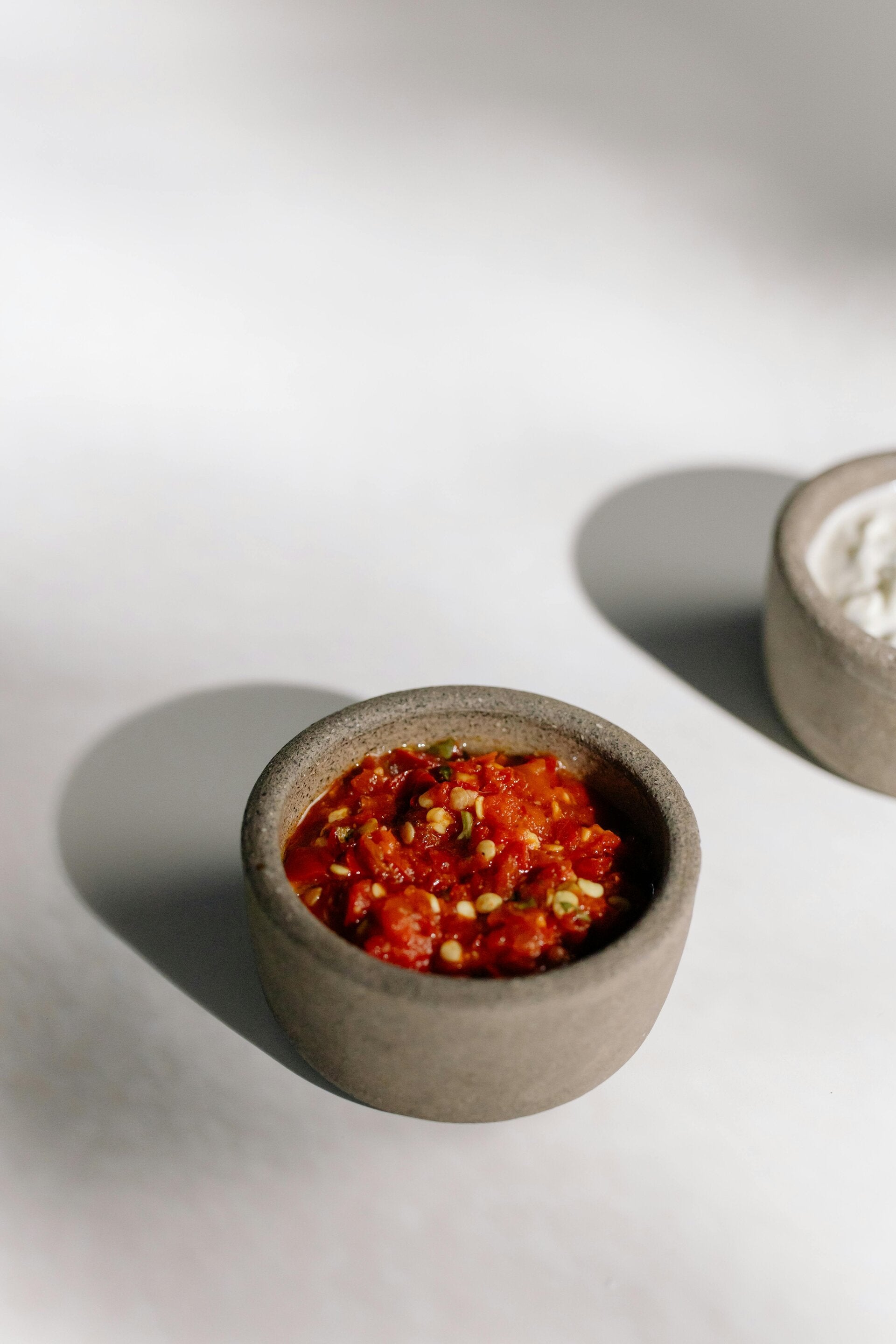
Ingredients you will need
To prepare delicious and authentic Indonesian Sambal, you'll need a selection of fresh ingredients to create its signature flavor and heat.
- For the Basic Sambal (Sambal Terasi):
- 10-15 red bird's eye chilies (or desired amount and type for heat)
- 5-7 shallots, peeled
- 3 cloves garlic, peeled
- 1-2 tomatoes, quartered (optional, for milder taste and texture)
- 1 teaspoon shrimp paste (terasi), roasted briefly
- 1 tablespoon palm sugar (or brown sugar)
- 1-2 tablespoons lime juice (or tamarind paste)
- Salt to taste
- 2-3 tablespoons cooking oil
- Optional Additions (for variations):
- Fresh ginger or galangal
- Lemongrass stalk
- Kaffir lime leaves
- Fried anchovies
- Mango (for Sambal Mangga)
- Green chilies (for Sambal Ijo)
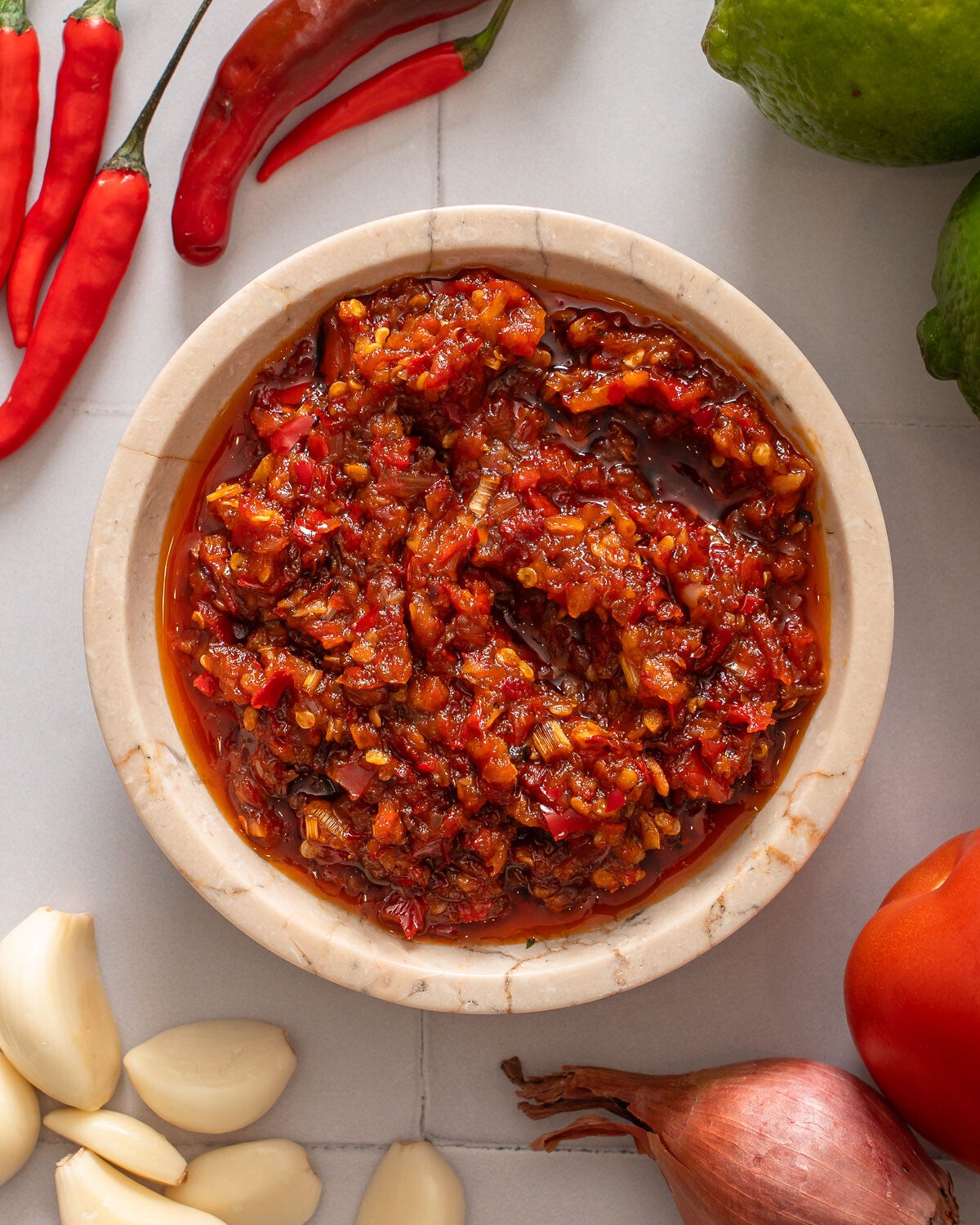
Step-by-step instructions
Follow these steps to create delicious Indonesian Sambal, from preparing the fresh ingredients to achieving the perfect blend of flavors.
- Prepare Ingredients: Wash and deseed chilies if you prefer less heat. Roughly chop shallots, garlic, and tomatoes (if using). Briefly roast the shrimp paste in a dry pan until fragrant.
- Grind Ingredients: Using a mortar and pestle (preferred for authentic texture) or a food processor, combine chilies, shallots, garlic, tomatoes (if using), and roasted shrimp paste. Pound or pulse until a coarse or fine paste forms, depending on your preference.
- Sauté the Sambal: Heat cooking oil in a pan or wok over medium heat. Add the ground sambal paste and sauté for 5-10 minutes, stirring frequently, until fragrant and the oil separates slightly. This cooking step is crucial for deepening the flavor and ensuring the sambal lasts longer.
- Season the Sambal: Add palm sugar, lime juice (or tamarind paste), and salt to taste. Continue to cook for another 2-3 minutes, stirring until the sugar has dissolved and the flavors are well combined. Adjust seasonings as needed – it should be spicy, savory, and have a hint of sweetness and tang.
- Cool and Serve: Remove the sambal from heat and let it cool completely before serving. This allows the flavors to meld further.
- Storage: Store homemade sambal in a clean, airtight jar in the refrigerator for up to 1-2 weeks.
Chef's tips for success
Master the art of Indonesian Sambal with these expert tips, ensuring your chili paste is always flavorful, aromatic, and perfectly balanced.
- Fresh Ingredients are Key: Always use fresh chilies, shallots, and garlic for the best flavor and aroma.
- Adjust Heat: You can easily control the spiciness by increasing or decreasing the number of chilies or by using different types of chilies (e.g., larger red chilies for milder heat, bird's eye for intense heat).
- Roast Shrimp Paste: Don't skip roasting the shrimp paste (terasi) – it dramatically enhances its umami flavor and reduces its pungent aroma.
- Mortar and Pestle: While a food processor is convenient, a mortar and pestle (cobek and ulekan) will give your sambal a more authentic texture and depth of flavor by gently bruising the ingredients.
- Sautéing Time: Sautéing the sambal paste long enough (until the oil separates) is crucial. This cooking process brings out the flavors, mellows the raw garlic/shallot taste, and extends the shelf life.
- Balance Flavors: The perfect sambal has a balance of spicy, savory, sweet, and tangy notes. Always taste and adjust salt, sugar, and lime juice as you cook.
We love hearing from you! Leave a comment or rate this recipe to share your experience with the VTSU Morey Dining Hall community. Your feedback helps us grow and improve.
Add comment
Comments